Swedish dishcloths: how they work and how long they last

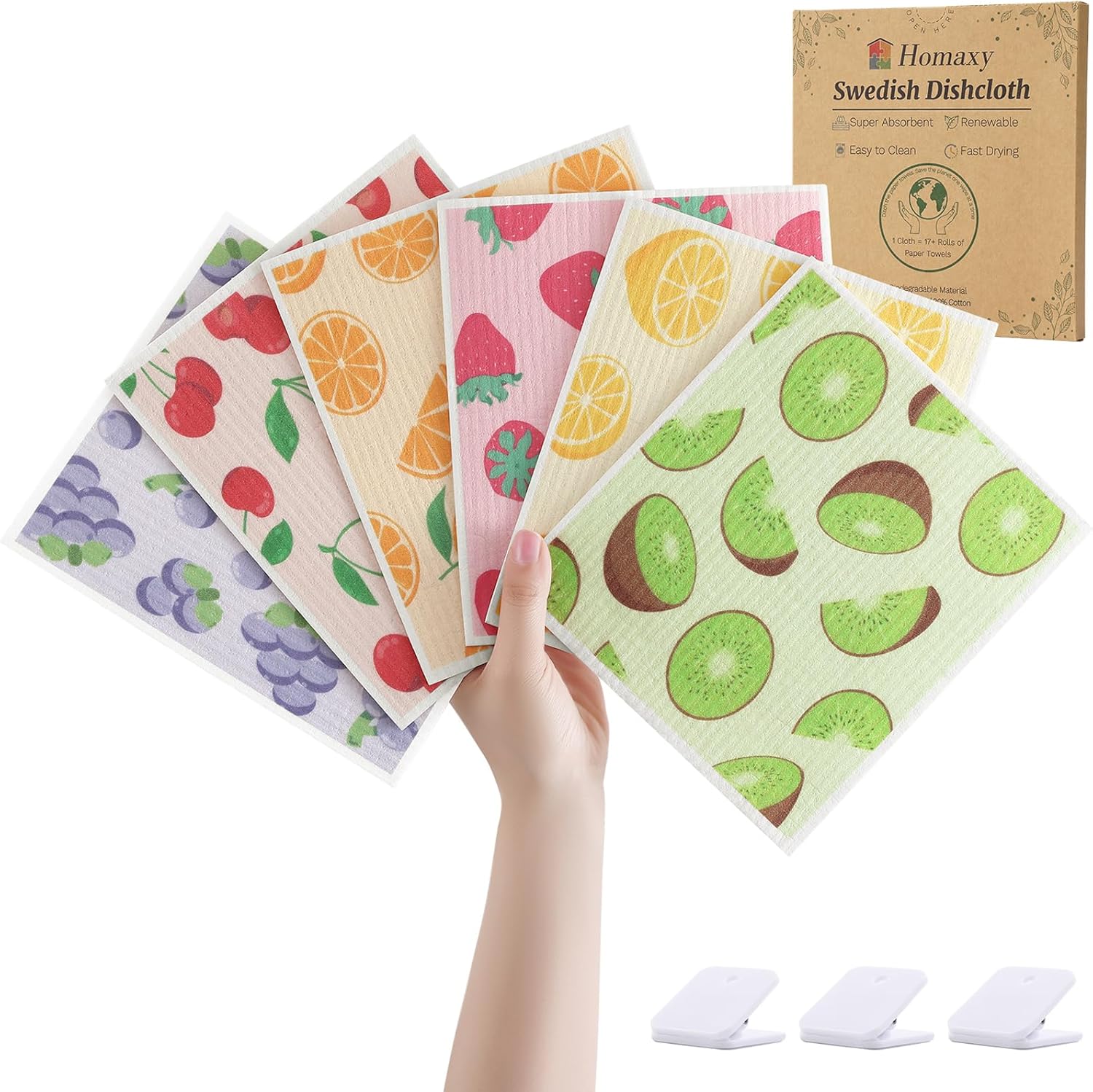
Swedish dishcloths generate more questions than almost anything else in a cleaning cupboard, mostly because they behave unlike both a sponge and a cloth. They are a blend of cellulose and cotton, and understanding that composition explains the stiffness, the absorbency and the eventual end of life.
Cellulose and cotton, pressed into a sheet
The cellulose provides the absorbency and the cotton provides the structure that stops it falling apart when wet. Together they hold many times their own weight in water.
That is why one cloth genuinely replaces a substantial quantity of paper towel — it is not marketing, it is the absorbency of the material.
Stiff when dry is correct
A dry Swedish dishcloth is hard and board-like. That is simply what dry cellulose is, and it softens completely within seconds of being wetted.
It is also a hygiene advantage: the cloth dries out rather than staying damp, which is precisely why it does not develop the smell a sponge does.
They are machine and dishwasher washable
They can go in with the dishes or in a normal machine wash, and both work well. Repeated washing is what gets the working life up into the dozens.
Avoid fabric softener for the usual reason — it coats the fibres and reduces the absorbency that is the whole point.
Expect months rather than weeks
A cloth washed regularly typically lasts several months in daily use, which is a very different proposition from a sponge lasting a fortnight.
The end comes when it starts to fray or thin at the edges and no longer holds together properly.
They compost at the end of life
Because they are cellulose and cotton, a worn-out cloth breaks down in a compost heap. Cutting it into pieces first speeds that up considerably.
That end-of-life route is a genuine difference from a synthetic sponge, and it is the reason many people switch.
They are not scourers
A cellulose cloth wipes and absorbs. It will not shift baked-on residue, and trying to make it do so wears it out prematurely.
Keep a brush or a proper scrub pad for that work and let the cloth do what it is good at.
Cloths on this shelf
The Swedish dishcloths here come in multi-packs, which suits rotating several so each one dries fully between uses. On our own shelf that range currently runs from $7.99 for the Aitoper Swedish Dishcloths, 6-Pack Reusable Fruit Design Kitchen Towels up to $22.99 for the mioeco 10 Pack Reusable Organic Cotton Paper Towels, Natural.
All of the following are filed under Kitchen Linens — 4 products at present. Listed prices are checkout prices; case quantities are priced on the same basis.
- Aitoper Swedish Dishcloths, 6-Pack Reusable Fruit Design Kitchen Towels — $7.99
- Homaxy 6-Pack Fruit Reusable Swedish Dishcloths for Kitchen Cleaning — $9.98
- All-Clad Premium Silicone Oven Mitt, Titanium Gray – 1-Pack, 14"x7" — $18.99
- mioeco 10 Pack Reusable Organic Cotton Paper Towels, Natural — $22.99
Related reading
Two other pieces on this site cover ground next to this one. That musty smell is bacteria that survived the wash, and the usual cause is washing too cool and drying too slowly. And on a related note, going completely paper-free usually fails. Replacing the four or five biggest uses usually sticks.
- Reusable kitchen cloths and the smell nobody talks about
- Cutting down on paper towel without making life harder
Mistakes that shorten their life
Using one as a scourer is the main one. Cellulose is not abrasive and forcing it against baked-on residue tears the fibre structure, which is why a cloth used that way frays within weeks rather than lasting months.
Leaving one screwed up wet is the other. It will not smell the way a sponge does, but repeated slow drying in a ball distorts the sheet and it never lies flat again.
Getting them properly clean
Running them through the dishwasher on the top rack is the easiest method and it works well. A machine wash with towels is equally effective and is convenient if you have several in rotation.
What to avoid is bleach, which breaks down cellulose fibres and shortens the working life noticeably. If a cloth needs sanitising, heat does the job without the damage.
Where they outperform a sponge and where they do not
For wiping surfaces, drying hands and mopping spills, a cellulose cloth holds far more liquid than a sponge of similar size and wrings out more completely, which is why one cloth handles a whole counter.
For anything requiring pressure against a hard surface, a sponge or brush is better. The cloth has no structure to press against, so scrubbing with one is tiring and largely ineffective.
Getting the most from them
Rinse and wring after use, wash them with the dishes or in a machine load without softener, rotate a few so each dries out, and compost them when they start to fray. Handled that way they replace a great deal of paper towel.
Cases leave our warehouse in Vernon, CA at $5.25, free above $45, with 30 days for unopened returns. Email [email protected] for quantities.