Oven mitts: heat rating, length and the wet-mitt problem

Oven mitts are bought casually and matter more than that suggests, because the failure mode is a burn. Three things determine whether a mitt actually protects: what it is made of, how far up the arm it reaches, and — the one almost nobody thinks about — whether it is dry.
A damp mitt is barely a mitt at all
Water conducts heat far better than the air trapped in fabric. A mitt with any dampness in it transmits heat to your hand quickly, and the burn happens before you can react.
This is the most common oven mitt injury and the easiest to avoid: never use a mitt that is damp, and never use one to lift something wet.
Silicone grips and resists water; fabric insulates and breathes
Silicone gives excellent grip on a hot dish and cannot absorb water, which eliminates the problem above. It insulates less well for its thickness and can feel clammy.
Fabric insulates well and is more comfortable, and it absorbs. Many good mitts combine both: a silicone grip surface over an insulating lining.
Length matters when reaching into an oven
Most burns happen on the forearm against the oven rack or door edge rather than on the hand. A short mitt leaves exactly that area exposed.
A mitt reaching well up the forearm is markedly safer for anything that involves reaching into the oven rather than lifting from the hob.
Heat ratings assume brief contact
A stated temperature rating describes short contact, not holding a hot tray indefinitely. Insulation slows heat transfer; it does not stop it.
Plan to move the dish and put it down. If you need to carry something a long way, that is a two-mitt job done briskly.
Grip failure is a burn risk too
A mitt that cannot hold a heavy dish securely leads to dropping it, which is dangerous in a different way. Silicone ridges or a textured palm make a real difference with a heavy roasting tin.
Test the grip on something heavy and cold before you rely on it with something hot.
Wash them, and dry them completely
Mitts get greasy, and grease is flammable near a gas flame. They need washing like any other kitchen textile.
The important part is drying them fully afterwards, for the reason at the top of this article. A mitt that feels slightly cool may still be damp.
Mitts on this shelf
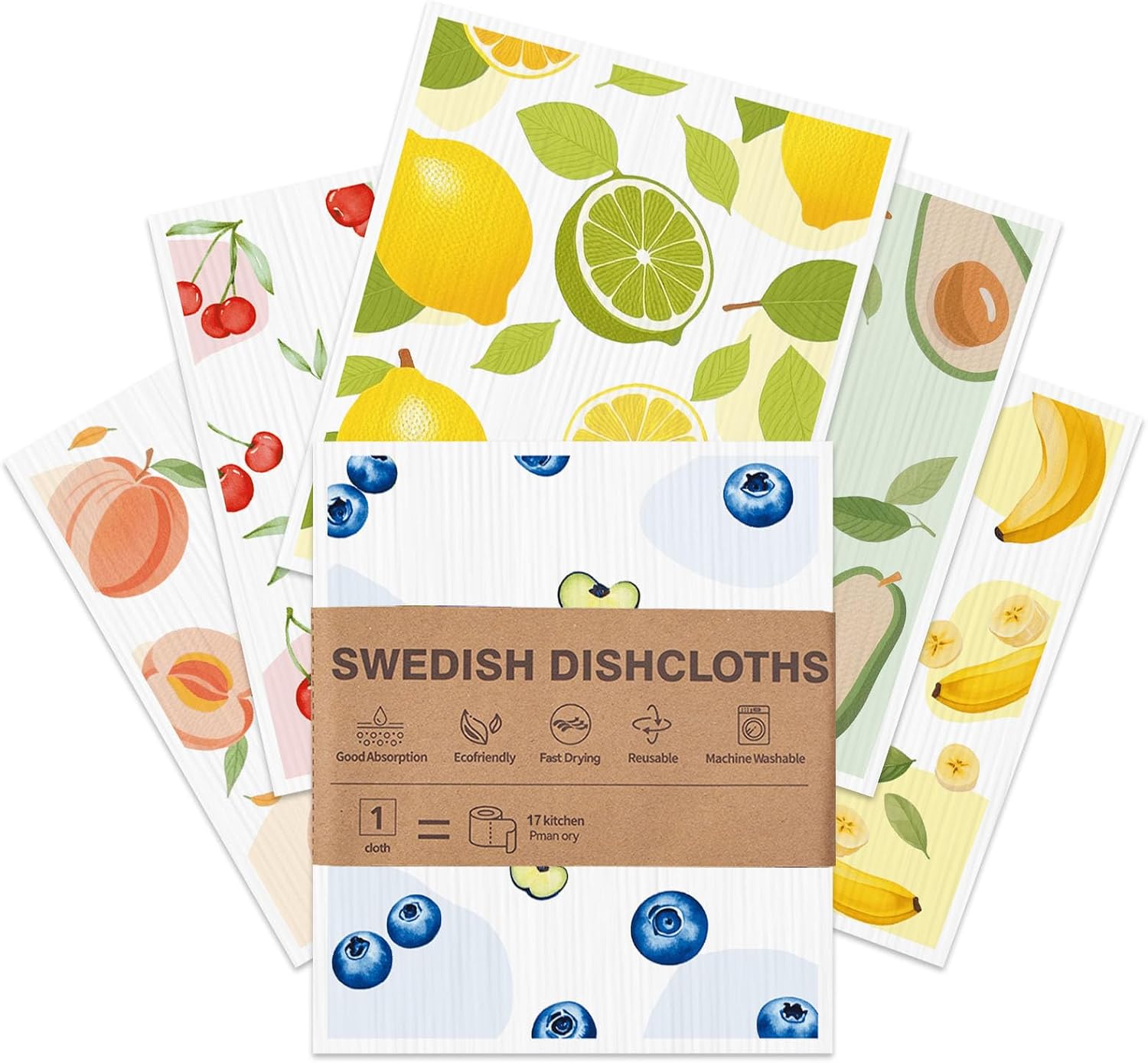
The silicone mitts here give the grip and water resistance that matter most, in a length that covers the forearm. On our own shelf that range currently runs from $7.99 for the Aitoper Swedish Dishcloths, 6-Pack Reusable Fruit Design Kitchen Towels up to $22.99 for the mioeco 10 Pack Reusable Organic Cotton Paper Towels, Natural.
All of the following are filed under Kitchen Linens — 4 products at present. Listed prices are checkout prices; case quantities are priced on the same basis.
- Aitoper Swedish Dishcloths, 6-Pack Reusable Fruit Design Kitchen Towels — $7.99
- Homaxy 6-Pack Fruit Reusable Swedish Dishcloths for Kitchen Cleaning — $9.98
- All-Clad Premium Silicone Oven Mitt, Titanium Gray – 1-Pack, 14"x7" — $18.99
- mioeco 10 Pack Reusable Organic Cotton Paper Towels, Natural — $22.99
Related reading
Two other pieces on this site cover ground next to this one. Compostable cutlery is a good answer to a specific problem and a poor substitute for reusables. And on a related note, bulk buying saves money on the things you get through and wastes it on the things you do not.
- Compostable cutlery: what it is for and where it fails
- Buying cleaning supplies by the case without overbuying
Mistakes that cause burns
Using a folded tea towel instead of a mitt is the most frequent, and it fails because a towel unfolds, has no grip, and is very often slightly damp from drying dishes.
Gripping a hot handle for longer than intended is the second. Insulation slows heat transfer rather than stopping it, so a mitt that is comfortable for five seconds may not be at twenty.
Checking a mitt is still doing its job
Insulation compresses with use, particularly at the fingertips and the pad of the thumb where most gripping happens. A mitt that felt adequate a year ago may have thinned exactly where it matters.
If you can feel heat noticeably sooner than you used to, the insulation has packed down and the mitt should be replaced. It is a cheap item protecting against a real injury, and there is no sense keeping a worn one in service.
Silicone or fabric, and why many good mitts are both
A silicone outer gives grip and cannot absorb water, which removes the single most dangerous failure mode. What it does not do well is insulate for its thickness, and it can feel clammy against the hand over a long session.
Fabric insulates better and breathes, and it absorbs. That is why a great many well-made mitts are a hybrid: a silicone gripping surface over a quilted lining, taking the useful half of each.
Choosing and using one
Pick something that covers the forearm with a grippy surface, keep a pair so one is always dry, never use a damp mitt or lift something wet with one, and wash and dry them properly. That covers essentially every way a mitt fails.
Cases leave our warehouse in Vernon, CA at $5.25, free above $45, with 30 days for unopened returns. Email [email protected] for quantities.