Buying cleaning supplies by the case without overbuying

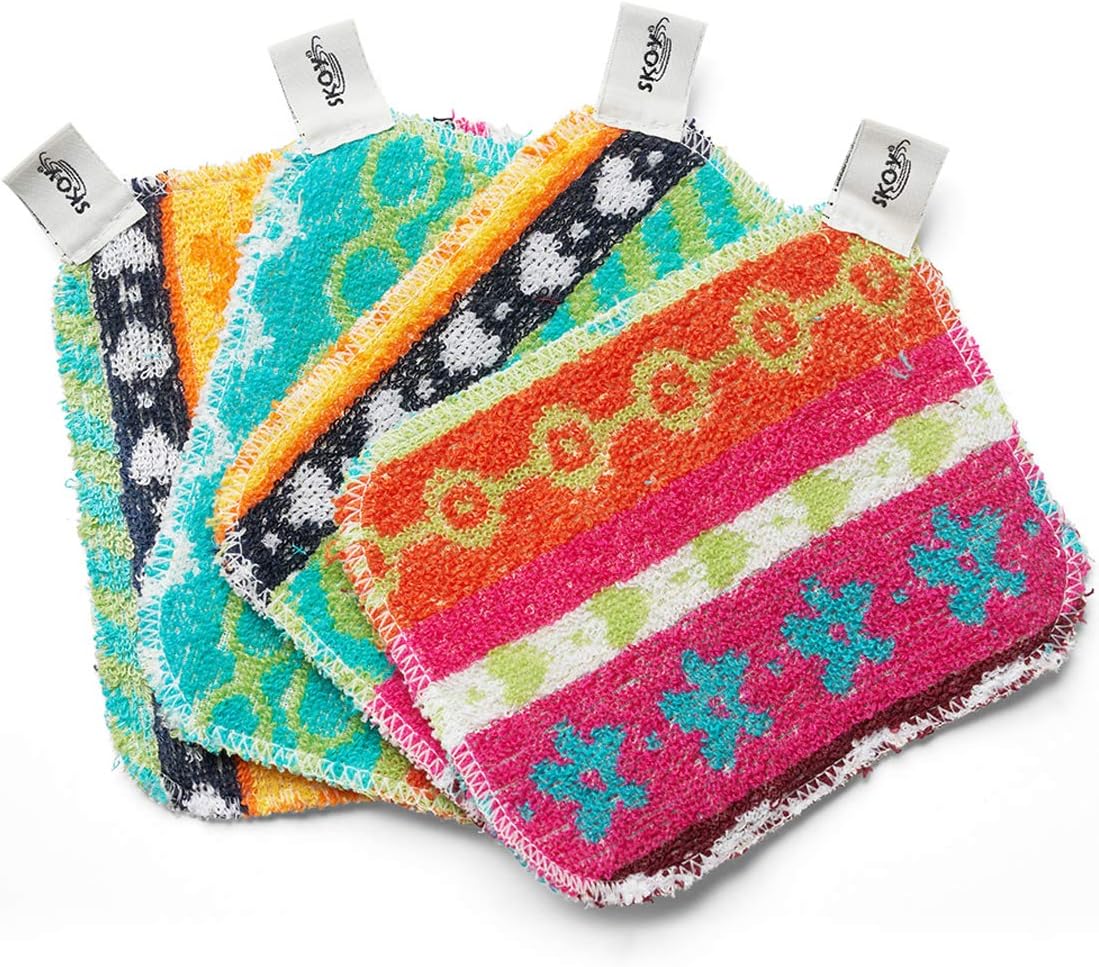
Case quantities are meaningfully cheaper per unit, which makes them attractive for a busy kitchen or a household that wants to stop running out. The risk is buying a year of something you use twice, so the decision is worth basing on actual consumption rather than on the discount.
Work from consumption, not from the discount
Estimate how many of an item you get through in a month, then buy no more than about six months of it. That is enough to capture most of the price advantage without storing things indefinitely.
The per-unit saving on a two-year supply is barely different from a six-month supply, and the storage cost is much higher.
Sponges and cloths store indefinitely, dry
Cellulose sponges, dishcloths and cotton towels are stable for years if kept dry. There is essentially no downside to buying these in quantity.
These are the strongest case for bulk buying in a cleaning cupboard.
Anything with a scent or a liquid has a shelf life
Detergents, tablets and scented products degrade over time — fragrance fades, and some formulations separate or lose effectiveness.
For these, a shorter horizon makes sense. Six months is a reasonable ceiling for most household quantities.
Damp storage undoes the saving
Cardboard cases stored somewhere damp turn into a problem regardless of contents. Cellulose products absorb humidity, and cardboard supports mould.
Somewhere dry and off the floor is the requirement. Under a sink is usually the worst place in the house for this.
Split the case into a working quantity
Keeping the whole case in the kitchen defeats the point and looks cluttered. Decanting a few weeks worth into the cupboard and storing the rest elsewhere works better.
It also makes it obvious when you are running low, because the working supply visibly empties.
Standardise before you bulk buy
Buying a case commits you to one product for months. It is worth being confident you like it first, especially with cloths and sponges where preferences are strong.
Buy a small pack, use it for a few weeks, then buy the case. That sequence avoids the most expensive mistake in bulk buying.
Case quantities here
Most lines on this shelf are already multi-packs, and larger quantities than those listed can be arranged directly. On our own shelf that range currently runs from $4.97 for the OstWony 12-Pack Purple Coral Fleece Kitchen & Dish Towels, 10"x6" Reusable Cleaning Rags up to $9.99 for the Skoy Scrub 4-Pack: Reusable, Non-Scratching Dish Scrubber for Kitchen Cleaning.
All of the following are filed under Cleaning Supplies — 16 products at present. Listed prices are checkout prices; case quantities are priced on the same basis.
- OstWony 12-Pack Purple Coral Fleece Kitchen & Dish Towels, 10"x6" Reusable Cleaning Rags — $4.97
- CADONO Non-Scratch Dual-Sided Scrub Sponges for Kitchen (6-Pack, Gray-Blue) — $4.99
- SAOYOAS 12-Pack Coral Velvet Quick Dry Kitchen & Cleaning Towels — $4.99
- INFICRIME 20-Pack 3-Layer Metal Wire Dish Cloths, 7.87" Non-Scratch Cleaning Rags — $6.98
- HOMEXCEL 24-Pack S-Shape Non-Scratch Natural Dish Sponges for Kitchen Cleaning — $9.49
- Skoy Scrub 4-Pack: Reusable, Non-Scratching Dish Scrubber for Kitchen Cleaning — $9.99
Related reading
Two other pieces on this site cover ground next to this one. A cellulose dishcloth going stiff when dry is the material working correctly, not a fault. And on a related note, that musty smell is bacteria that survived the wash, and the usual cause is washing too cool and drying too slowly.
- Swedish dishcloths: how they work and how long they last
- Reusable kitchen cloths and the smell nobody talks about
Where bulk buying goes wrong
Buying a case of something untested is the classic error. A year of a cloth you turn out to dislike is worse value than a small pack of one you like, however good the per-unit price looked.
The second is buying for an imagined rate of use rather than the real one. Estimating consumption from an actual month is far more reliable than guessing, and it is usually lower than people expect.
Storing a case so it stays usable
Cardboard on a floor, especially under a sink, absorbs moisture from below and the contents follow. Anything cellulose in a damp box will be affected within months.
Off the floor, somewhere dry, with the box opened and resealed rather than left gaping is enough. Decanting a few weeks worth into the kitchen keeps the bulk undisturbed and makes the working stock visible.
Splitting a case with somebody else
For a household that cannot get through a case in six months, splitting one with a neighbour or family member captures most of the price advantage without the storage problem.
It also solves the standardisation risk: two households trying a case between them are both committing to less. It is an obvious arrangement that very few people actually make, and it works particularly well for cloths and sponges.
A sensible approach
Try a small pack first, estimate your monthly use, buy about six months of the things that store well, keep less of anything scented or liquid, store it dry and off the floor, and keep only a working quantity in the kitchen.
Cases leave our warehouse in Vernon, CA at $5.25, free above $45, with 30 days for unopened returns. Email [email protected] for quantities.